
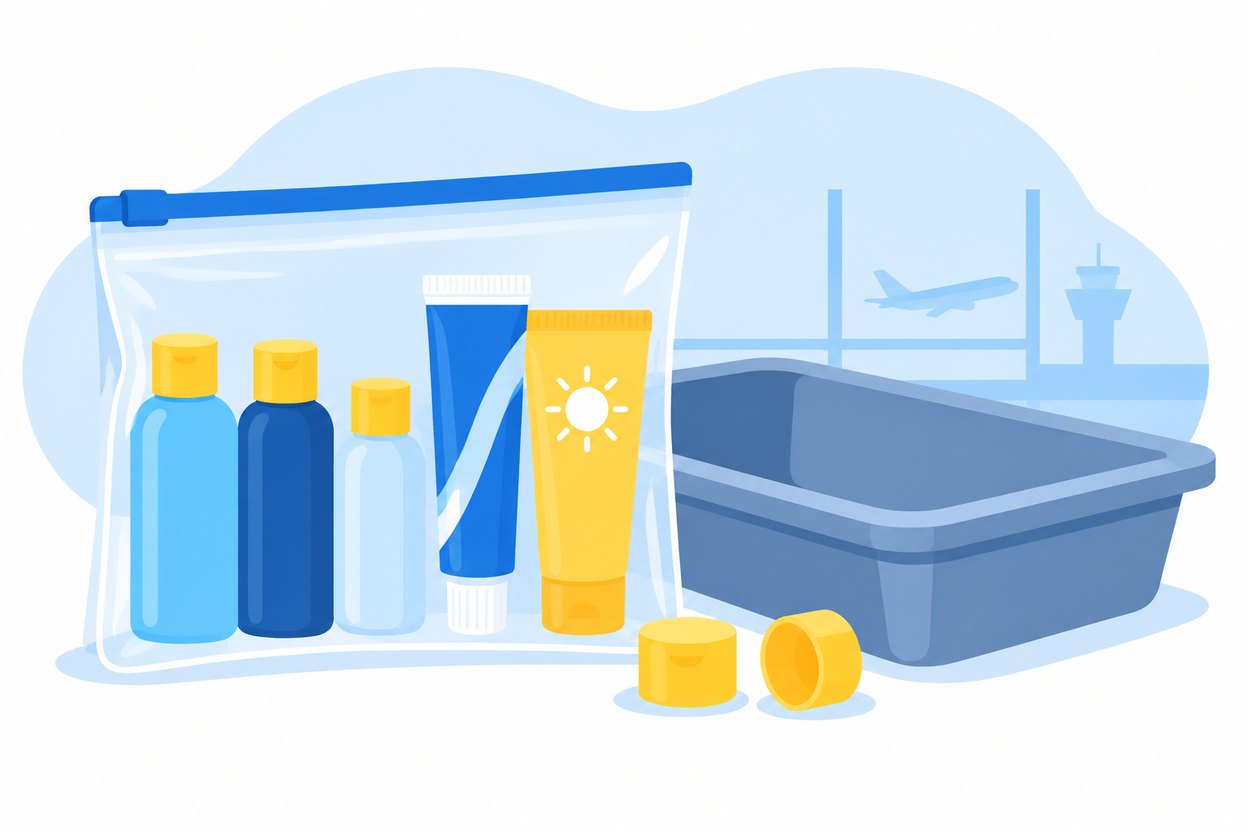
Count containers before closing the bag
Enter the liquid amount you want to bring for each of up to six toiletries. Each item is divided into containers holding at most 100 ml, so 150 ml of shampoo requires two containers rather than one partly filled large bottle. This planner assumes every required container occupies a full 100 ml of bag capacity. That deliberately conservative estimate leaves less room than a plan using smaller travel bottles for small quantities.
Use the result to organize the next decision, then verify the details against your own documents and itinerary. Save the assumptions you entered so that you can repeat the comparison if your dates, prices, or travel arrangements change. A calculator cannot see restrictions buried in a booking confirmation or policy wording. When an input is uncertain, try a conservative alternative and look at whether the outcome changes enough to affect what you book.
Check the rule for every airport
The one-liter capacity used here is a planning approximation, not a universal screening standard. US guidance describes a quart-size bag, which is slightly smaller, and screening rules can differ by airport or itinerary. A bag must physically close around the containers, so a numeric fit does not guarantee acceptance. Review rules for connections as well as departure, and check separate procedures for necessary medication, infant supplies, and other permitted exceptions.
Before acting, review the result with the person responsible for the booking and check any relevant provider instructions. Keep a copy of important confirmations available offline during the trip, especially when internet access may be unreliable. If your circumstances differ from the simplified assumptions explained above, adjust your plan rather than treating the displayed answer as a requirement. The most useful estimate is one you can trace back to realistic inputs and update when something changes.